Being Lost Lead Me Here

Photo by elCarito on Unsplash

Has there been a time you experienced fear doing something new, but followed by exhilaration and a desire to improve?

I happen to experience this recently. The feeling, while exciting, wasn’t the coolest part though. What was eye opening, was the length of time and culmination of all the events that lead to it. Maybe this experience is common, but for me, who’s been struggling for a considerable time, this was a refreshing moment. So what was this moment and how did I get here? Humor me by starting with a memory of being lost.

Remember back to a time when you were heading somewhere new, for an interview or to eat at a new restaurant. Along the way, you take a wrong turn and end up lost for a short time. You’re in unfamiliar surroundings and feel a bit of urgency as the clock ticks closer to the expected time of arrival. You eventually arrived at the destination, but being lost made the trip stressful.

Now think back to a time when you were on vacation. You’re wandering around the new city, experiencing the unknown. At some point, you decide to head to a specific restaurant or tourist site. En route, you take a few wrong turns that lets you see more of the city, but you get to the intended destination with a couple unplanned surprises.

Zoom out with me now, to not specific moments, but a period in life when you may have felt directionless, feeling lost. Maybe due to not having a clear career path, not knowing which major to choose, feeling unsettled, feeling like an outsider, feeling purposeless; it could all be clumped as “being lost” and not sure where you are going.

In all three of these memories, you were lost. Its the third memory though, that may trigger the most anxiety. You may even be going through this now, like me.

I have felt lost for what seems my entire life. This website is themed around finding direction and purpose. Being lost in life is often a negative feeling. And why wouldn’t it be? It can be paralyzing, especially when it lasts several months or years, and an end doesn’t seem in sight.

I bring this up because I recently started to have conversations about mental health with my friend Sean Li, founder of Clever.fm. We enjoyed the early conversations so much, that he suggested we record them for a podcast, which has been titled “Startup Struggles.” For both of us, the main goal wasn’t actually the podcast itself, but to voice our weekly struggles, which has become therapeutic in a way. We thought that others could benefit from hearing our lessons from relatable difficulties.

The first episode, published on October 21, 2021, was about finding the courage to change, and overcoming limitations. If you’re anything like me, and hundreds of other people, listening to your own voice can be cringing. After a few hours of dreading it, due to fear of sounding stupid and being embarrassed, I finally listened.

While the first few minutes were definitely cringe worthy, what I experienced next was something entirely new, something I’d never felt before.

It was a feeling of wanting to become a better speaker by learning from mistakes in the episode. While it was embarrassing to hear how long winded I could be (similar to my writing, which I’ve been trying to improve!), how I mispronounced words, or repeated a word a billion times, my fear was overpowered by my urge to improve. This was an entirely new sensation and I discovered that I actually liked podcasting (so far)!

Even two months ago, I would not have thought I’d be recording a podcast. But after listening to only one episode, I found myself drawn it. We’re currently working on our fourth episode, and while it’s still a young venture, I began to wonder “how the hell did I get here?”

I can’t pinpoint when my journey took a turn towards this moment, but what I can say is being lost lead me here. I started journaling, via writing and audio recordings, because of my struggles. Journaling lead to writing these articles. Feeling lost, pushed me to move from city to city, ending up in Vietnam. There, I developed a program centered around collecting mental health data using my audio journals. It was all these experiences and struggles combined that prompted the early conversations with Sean, which then lead to podcasting.

Being lost, and continuously searching, albeit extremely slowly, I would not have ended up doing things I’m interested in: writing, programming, and podcasting about mental health.

It’s only in hindsight that I can piece the puzzle together, to see the beginnings of a direction that I’d like to pursue. It all started because I was lost.

Have you noticed how stories turn into adventures only because of a wrong turn? They all begin from the unexpected. And if life is a journey, being lost sometimes seems natural.

In May of 2021, I wrote about how our minds could be manipulated by framing questions. We could even prime our days to see things in a positive manner. I realized I could apply this mindset to entire years of my life.

When thinking back now, each step was necessary for things to unfold as they have. While I still feel lost, and wish things could happen faster, I am beginning to accept that I am on the path that’s right for me. The timing, the turns, mistakes, right and wrong decisions, all lead me here. In a way, I am fortunate to have been lost. It kept me moving, continuously searching, being curious, and tugging at the random strings that appeared before me.

Don’t get me wrong, being lost still comes with anxiety. The not knowing and feeling that you should be somewhere, makes the lost experience stressful. But maybe that’s natural in life, and that our main priority is to get stronger by learning from the unexpected, to separate ourselves from expecting to be somewhere, and to experience the moments along the way.

When you distance yourself from expectations and outcomes, all of a sudden, it doesn’t matter when or how you get there. And ironically, you’d only arrive at a place where you don’t feel lost, after being lost.

So if you’re in the midst of feeling lost, don’t give up wandering. You have opportunities to keep looking. Don’t sit around and wait. Keep moving. It may seem directionless now, but even being in a lost state, every step is the right one, because you’re moving. Stay curious. It will be difficult, but the sensation of being lost will eventually turn into being found. Only you and your curiosity will find the path that will tug at your heart. You’ll never know where you’ll end up and that’s part of the adventure.

Let me leave you with this conversation between Thor and Dr. Erik Selvig after Thor had been stripped of his powers.

Thor: You know, I had it all backwards. I had it all wrong.
Selvig: It’s not a bad thing finding out that you don’t have all the answers. You start asking the right questions.
Thor: For the first time in my life, I have no idea what I’m supposed to do.
Selvig: Anyone who’s ever going to find his way in this world, has to start by admitting he doesn’t know.

We may not all have a giant hammer like Thor, but we’re all the main character in our adventures. So don’t let fear stop you when you’re lost. Your path will unfold as you continue to walk it.


Be Aware the Transition

When I began writing this article, I had one question typed out followed by a blinking cursor: why can’t I get started?

It seems so difficult to get going. Whether it was staring at a blank page hoping my fingers would magically create something, or staring at a filled page hoping I’d magically edit chaos into order, or even doing a simple task such as, “find cover photo,” it always seemed like a mountain to climb.

Why is taking the first step so difficult? People wiser than me, and with more letters next to their names, say it could be due to fear, lack of direction, relying too much on motivation or will power, lack of knowledge, starting too big… the list is endless. It’s probably a combination, but I mainly blame procrastination. I’ve procrastinated all my life, so this must be it. But wait, there have been times when I start immediately, like watching TV or getting candy.

In an unsubtle way to self-promote, I thought to how all decisions are mine and a light bulb went off in my head: even procrastination is a decision.

So I dug into my process of writing to look for not why I procrastinate, but how.

This is what I thought my process was:

  1. sit down
  2. turn on computer
  3. open Notion
  4. start writing

In reality, the truth was embarrassing:

  1. sit down
  2. turn on computer
  3. open Notion
  4. stare at blinking cursor
  5. check email and social media
  6. check sports news on ESPN
  7. check phone
  8. repeat steps 4-7 to infinity
  9. get distracted by pets cause they are so freaking cute and how could you ignore them?
  10. repeat steps 4-7
  11. start writing

Side note: While writing this list, I checked ESPN. Twice. Damn it. 🤦🏻

I knew I was doing this, but did I really? I thought about how I started other activities and noticed “filler steps” everywhere, even in the most straightforward ones. I always hit the snooze button, I check my phone or day dream while exercising, and cleaning the house is littered (was that a pun?) with tangents.

These filler steps are akin to side quests in a story. Some may play a role, but many do not move the main story forward.

As I was thinking about how easily I get distracted before tasks, I noticed the same distractions appeared even after I managed to get started.

It’s here I recognized a significant step I’ve been ignoring before the first step. That step was the transition. When so focused on what happens after we get started, we don’t consider the ritual that comes before. It’s the transition that sets the tone for how we proceed. In the sports world, there’s the transition before the start of the game, commonly referred to as the “pre-game ritual.” Every player has their own version to get into game mode. When applied to working or writing, it would be getting into a flow state.

When fighting to get started, take a look at the transition before the activity. Chances are, there’s filler steps that have bled into our pre-game rituals. We’ve let procrastination become a habit that has taken root into many of our systems. Some may even be hidden within healthy habits. My example is with freewriting.

Photo by Peter Neumann on Unsplash

I’ve been freewriting in the morning for almost 9 months, but I found procrastination habits embedded in the sessions. I’d write one sentence, stare out the window for a minute, write some more, get distracted by a squirrel, and continue this off and on writing. Although I completed the task, I never got into a writing flow state.

So I made an adjustment to be actively aware of my actions while freewriting. I told myself this was part of my transition to freewrite, that I must not allow distractions to take my focus, which then would set the tone moving forward.

As I began this practice, I thought it would be the fix I needed to be completely focused. I learned quickly though, old habits die hard. My mind had become accustomed to frequent breaks and allowing thoughts and squirrels to take attention at any moment.

As I struggled to adjust, I was frustrated at myself for being sidetracked so often. Freewriting became noticeably harder, which I did not want to accept. But a thought dawned on me: it became more difficult because I was adjusting the process. Struggling was actually a good sign. It showed I was trying to improve. Lately as I freewrite, I catch distractions quicker and can get back to writing. While it has been more frustrating, I feel much more accomplished when I’m able to finish.

By starting to look at the transition into freewriting, I’ve found poor transitions in other parts of my life. Even just a few months ago, I would have went on an extreme endeavor of overhauling all my transitions and rituals at once, expecting massive change in a matter of days. However, I’ve learned slowly and painfully, that while resetting everything would be ideal, it’s not realistic.

So I’ve started by looking at my morning routine, which I’m calling Opening Credits, and am currently reworking it with the transition in mind. My reasoning for beginning with the morning is that setting a better flow between morning activities sets the tone for the rest of the day, similar to how an opening scene for a movie sets the tone for the rest of the film.

To dig even deeper, and to start smaller, my main priority is getting up without snoozing. This seems to be a small transition with two steps (wake up, get out of bed), but has a strong impact for the rest of the day.

Snoozing is a procrastination habit. By repeatedly snoozing, I have been subconsciously telling myself that it’s okay to procrastinate. While sometimes it’s okay to snooze, I’ve set a new rule of not snoozing two days in a row. As of this writing, I’ve successfully not snoozed 5 out of the last 7 days, which I have to say is pretty damn amazing. Go me.

The adjustment was knowing exactly what I would be doing when I awoke, my Opening Credits, which I made into a checklist in Notion. I won’t lie, I still idle and reach for the phone more often then I’d like, but knowing what to do next, and seeing a growing list of completed items, gives me the kick I need to keep moving.

While I’ve been focused primarily on just two things, writing and snoozing, I now find myself catching filler steps elsewhere. Even though starting small, my mind has started to adapt this practice to other areas. It seems to be adjusting in the background, which feels pretty good.

I always thought I couldn’t get started because I was lazy and lacked the skills. However becoming aware of my poor transitions, I’ve realized that it’s my transition ritual that has eaten away at my abilities to accomplish things.

So pick a couple things you want to do without delaying, and take a look at your transition leading up to the activity. You may have filler steps that appear in both your transition and working mode that prevent you from starting and getting into a flow state.

Once you decide which two transitions you want to clean up, write down honestly what you do leading up to the activity, even if it’s glaringly obvious. Writing these down makes it easier to catch to help you stay focused.

So get going. Become aware of transitions and start removing filler steps to get your story moving forward.

Image Credits:
Writing: Photo by Glenn Carstens-Peters on Unsplash
Squirrel: Photo by Peter Neumann on Unsplash

Chasing Struggles

Photo by Joshua Gresham on Unsplash

When I was growing up, I used to believe that life would get easier. I thought once I graduated college and got my first job, the rest of my life would fall into place, and I’d live happily ever after. I thought that struggles would slowly disappear as I figured out life. What I learned, and continue to learn, is that this is a very unrealistic way to think. Let’s put it into the context of playing a game.

Imagine that you’re playing a game on Mode A. As the game progresses, your character gets stronger as it learns more skills, and you get better with more experience. On Mode A, the enemies stay the same strength from level to level, which makes the game not very challenging, and you finish it with ease.

You decide to play the game again, but on Mode B. In this mode, as the game progresses, the enemies level up to match your skill. At some levels, you have to find different methods to defeat the enemy because they are stronger than you. You have to adapt different strategies and upgrade to continue the game. It stays challenging though the end, but you still beat the game.

Which mode is better?

While Mode A was easier, it’s probably more fun to play in Mode B. It makes more sense that the enemies would get stronger as the game progresses, right? You’d feel more satisfied at the end, and beating the game in Mode B would be much more rewarding. You might already know where I’m going with this, but which mode is life in?

Yeah, life is in Mode B.

What I learned is that expecting the hardest, most realistic game to be played in Mode A is kind of delusional. For one, it doesn’t actually exist, and second, even if it did, we’d likely get bored. It’s not challenging enough to keep us interested and the reward wouldn’t actually feel like a reward. It’d feel kind of like receiving a participation trophy. Yeah, it’s cool to get a trophy, but it’d probably sit in the back corner of your trophy case, if at all.

I thought that as I overcame more difficulties and struggles, the next time would easier. In some ways, things did become easier. What I didn’t realize was that there would be different struggles. That as life progressed, I became stronger in some ways, but life challenged me in other ways.

For a long while, I thought I was living incorrectly. If I was living life the right way, wouldn’t things become easier overall? Wouldn’t working become less stressful, relationships become more manageable, and I’d make less mistakes?

As life became harder, I kept thinking I must have taken a wrong turn somewhere. I moved jobs, moved cities, ran away relationships, all because I did not understand that life was in Mode B. As you level up in life, life levels up with you. At each new level, there are new struggles and challenges. That’s just life, and we must learn to accept this.

What’s funny is that even if we accept something, we often forget. One of the few certainties of life, is that it will always remind you that leveling up comes with leveled up struggles. Biggie Smalls understood this as he wrote “mo money, mo problems.”

Writing this article was a reminder of exactly that. Well, not exactly, since I don’t have mo money problems … yet. I hoped that as I wrote more, writing would become easier. I hoped that over time, I’d be able to write just a little bit better, faster, smarter. While I do feel that this has happened on occasion, I am also reminded that just because I’ve written more, doesn’t mean that the struggles of writing disappear. I just get hit with different types of struggles. One week it’s not having enough content, the next week too much. Then there’s the dreaded writers block that can happen at any time. But what I learned is that the more you write, the more writers block you run into. And the more you live, the more struggles you’ll face.

Oddly enough, every time I get a reminder that struggles are here to stay, they get a little easier to bear. I was reminded that, yes, I will struggle, which is completely normal. And while I felt really shitty about myself struggling and banging my head against the keyboard, I felt the best only after overcoming it. How funny life is, that more often than not, the best highs come after the worst lows. Like Harvey Dent said in The Dark Knight, “the night is darkest just before the dawn. I promise you, the dawn is coming.”

So whenever you’re struggling, feeling down about life, remind yourself that it’s normal. You are facing a challenge and life is saying you’re close to leveling up. Keep going. And when you do overcome that struggle, don’t forget to celebrate and feel that moment. Like I wrote in It’s Okay to Have Negative Thoughts, hold the accomplishment in your attention. Let yourself feel the celebration! Then, go chase after the next struggle and enjoy the difficulty because you know that what comes next is your next level.

The Decision is Mine

Over the last few months, I’ve written about different methods to change viewpoints, mindsets, beliefs to get unstuck in life. The Living Accidentally series on ways to live a life with purpose. The It’s Okay series to accept how we currently think and shift to the next level of thinking. All the articles are written with one idea in mind: to see and act outside our current views.

Honestly, all this stuff is already out on the internet, written better and more concisely. Mark Manson and James Clear are a couple of my favorite writers who I try to emulate and their stuff is incredible. A lot of my articles were inspired by them.

I write not to come up with something new, but to help me articulate and organize my thoughts. I hope for the side effect to be that someone who may be like me, would benefit from my writing. Not because it’s amazing or new, but because it comes from a person who is also struggling. I am far from being an established writer, or even knowing what the hell I’m doing.

When I read Mark Manson or James Clear’s material, I can’t help but think “why can’t I be as thoughtful and articulate as them?” Or “why can’t I put their advice into practice?” Which then leads to “why can’t I take my own advice?!”

What’s holding me back?

It’s not the lack of information, because we’ve established that it’s available. It’s a click away via newsletters, articles, YouTube, Instagram. As I’ve been writing, and struggling to use self-improvement techniques to alter my current course, I came to realize there might be a single concept why I haven’t adjusted.

The decision is mine.

I believe many of us feeling stuck are waiting for a life altering point. Like in a time traveling movie, a point in time that creates a separate timeline, completely different from the one we are living today.

The reason why I’m still on my same course is because I haven’t accepted the hard, uncomfortable truth.

The decision is mine.

Understanding this simple phrase is the beginning of the life altering point I’ve been searching for. It’s the one decision I can make that impacts the entire day, and eventually my life. It’s not deciding which self-improvement technique to apply. The first step is to decide that any decision I make is mine.

It can be applied to everything. I decided to snooze and sleep in. I decided to eat toast for breakfast. I decided to fall into a social media rabbit hole. I decided to accept that meeting. I decided to decline that invitation. I decided to get angry while driving in traffic. I decided to learn something new. I decided to read. I decided to act. I decided not to.

Understanding and accepting that the decision is mine leads to an unavoidable truth: I decided to be where I am today. If I’ve been wanting to alter my course, but have not, it’s because the decision was mine not to.

Let this sink in.

Before beginning any self help techniques (like meditating, journaling, being grateful, not comparing, starting small, the list is endless), take a moment to understand how powerful this one statement can be.

The decision is mine.

Initially, there may be negative feelings attached with this realization. Accepting that the decision is mine erases the easy method of blaming others or events for things gone wrong. Blame is a defense mechanism to protect our egos. This is a normal, natural response. We all want to protect ourselves.

The danger of blame is that it gives away our responsibility. It strips us of our ability, our power to make a difference. But if I want to make a difference in my own life, I am responsible.

The decision is mine.

Now just because you are reading this, doesn’t mean that you will understand and accept this right away. Even after accepting the concept, the urge, consciously or not, to blame outside events when things don’t go our way, will be forever present. Often times, we have no control over the way some things happen. But the decision is mine, in how I react to it. It will be a constant engagement of the mind to live this concept.

Personally, it took years to begin to accept this. I may have heard it, but didn’t understand it. I may have understood it, but never accepted it. It’s why I’ve felt no matter what I read or wrote, I never got off the path I was on. I was on a loop, living the same day with the same mindset.

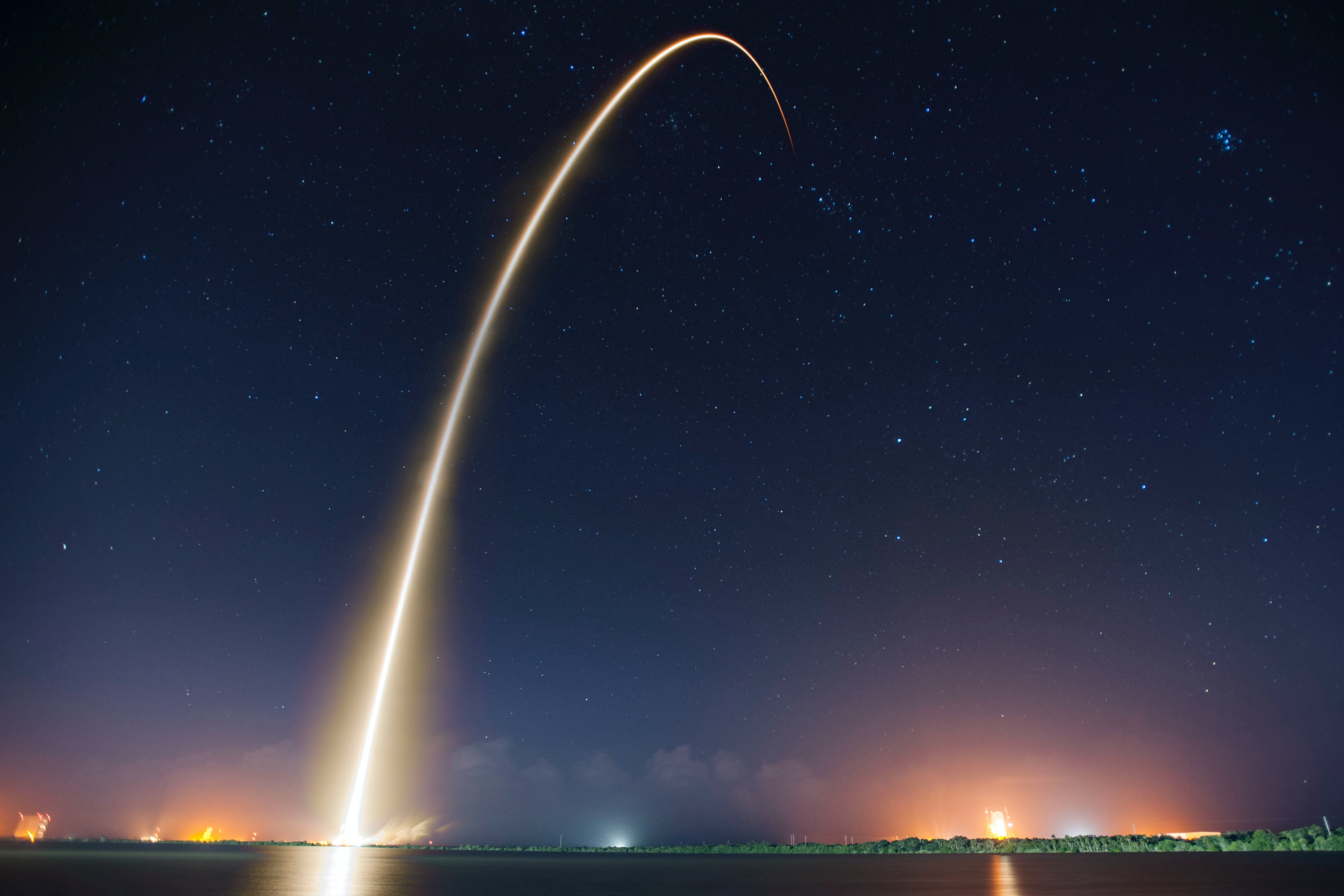
If you’re like me, you’ve been living on the same life course for many years. This course has all the power of time, momentum, and habits behind it. It’s like a rocket that’s been flying in one direction for years. Trying to alter the rocket’s trajectory is not a simple turn of a wheel. A rocket changes course by using thrusters to deploy bursts of air. And even then, it’s course adjustment isn’t seen immediately. It’s only seen over the entire course of its journey.

Taking the time to accept that the decision is mine, is the beginning of a rocket adjusting its course with slight bursts of air to change its trajectory. It’s the life altering point of its journey.

Change won’t be immediate, and you may barely feel the difference now. But with time, and only in hindsight, will you see how much your life course will change.

I strongly believe this single concept is the life altering point many of us have been looking for. We just expect change to be immediate. Release yourself from that expectation, because we won’t even know what change feels like. Change will mean something different, something new. Something new will be unfamiliar, meaning there’s no way we can know what to expect.

Take time to reflect on this concept. Apply it to everything that happens throughout your day, when you feel in control, and especially when things feel out of control. It will be difficult, but it will be empowering, because you will begin to have a sense of ownership, of responsibility. And often times, breaking out a loop and seeing outside your viewpoints, starts with even the smallest adjustment.

The decision is mine.

Image Credit: Photo by SpaceX on Unsplash